From the Shared Table to Parliament
Sometimes the work happening quietly in your own community carries a message the whole country needs to hear.
Dear friends,
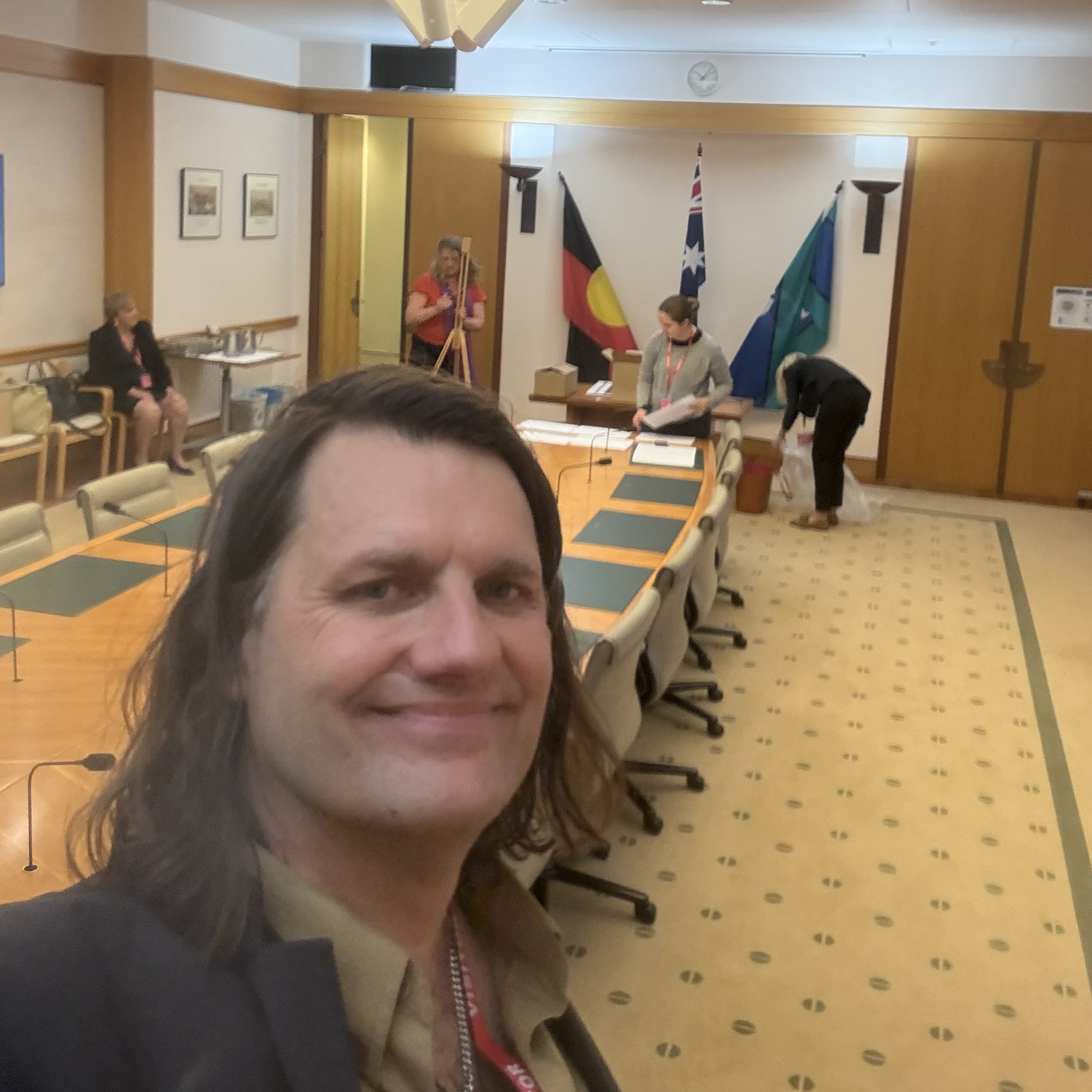
I’m home in Hobart after a few big days in Canberra with Foodbank, and I’ve been reflecting on what it means to take the story of our little community project all the way to Parliament.
Food Not Bombs Hobart began simply enough. We saw a need, found a way to respond, and kept showing up. There was no grand plan, no big organisation behind us, and certainly no parliamentary strategy. Just food that could be rescued, meals that could be shared, and people who deserved a place at the table.
Over time, that simple response has grown into something much bigger than a meal.
When the local becomes national
This week, I was invited to share my experience at a parliamentary briefing connected with the Hunger Report and the growing challenge of food insecurity in Australia.
It was quite something to be there.
I spoke about the work we do in Hobart, the people who make it possible, and what food insecurity looks like beyond the statistics. I also had the opportunity to speak with media about the realities facing people in our communities.
Our story appeared on Channel 10 at 5 News, and SBS World News and it was a reminder that the experiences of people on the ground can help bring a national issue into focus.
I went to Canberra to tell a story. What I came away thinking about was how many people are part of that story.
We make this possible
At our Saturday Shared Table, nobody needs to prove they deserve a meal. Nobody needs to explain their circumstances. The table is open, the food is shared, and everyone is welcome.
That sounds simple, but there is a lot behind it.
There are volunteers rescuing food, preparing meals, setting up tables, washing dishes and checking in on one another. There are businesses donating food, community organisations working alongside us, and people quietly contributing whatever they can.
There is Priscilla, there are our volunteers, and there are people whose contributions might never make a newspaper or television report.
This is what I wanted to carry with me to Canberra: we are not simply responding to hunger. We are building community.
Food rescue turns surplus into possibility. Cooking turns that food into a meal. And community makes it possible for people to share more than food.
They share a space where they belong.
The numbers matter. But so do the people.
Reports and statistics are important. They help us understand the scale of food insecurity and make the case for a stronger response.
But a statistic cannot tell you everything about sitting down to a meal when you’ve been having a difficult week. It cannot fully describe the value of being welcomed without judgement, or the difference it makes when someone remembers your name.
That is why grassroots work matters.
We see the practical needs, but we also see the social connections, the friendships and the small acts of kindness that help people keep going.
Food relief is essential. But we should also be asking how we create communities where fewer people need emergency relief in the first place.
How do we connect people with meaningful activity, opportunities to learn, ways to contribute and pathways into employment?
These are questions that sit behind my broader work with FNB Hobart, including our small projects in craft, community singing and social participation.
I believe people need more than assistance. We need opportunities to participate, to develop our abilities, to contribute something of ourselves and to be recognised for what we bring.
What happens next?
Coming home from Canberra, I’m reminded that telling our story is only one part of the work.
The next part is continuing to do it.
We will keep rescuing food. We will keep setting the table. We will keep looking for partnerships that help us reach more people and create more opportunities for participation.
And we will keep asking how a simple community response can become part of something bigger.
I’m grateful to Foodbank for making space for our experience to be heard, and to everyone in Hobart who has helped make this work what it is. I may have been the one standing in Parliament, but I certainly didn’t get there alone.
The Shared Table belongs to all of us.
Food rescues hope. Community makes it possible. And nobody should have to face hunger alone.
Until next time,
Christiaan
Food Not Bombs Hobart | Notes From the Field
P.S. If you missed the news coverage from Canberra, I’ll be sharing the Channel 10 and SBS story here on our page. It’s an opportunity to help more people understand food insecurity and the community response happening right here in Hobart.
More Notes From the Field:

Leave a Reply