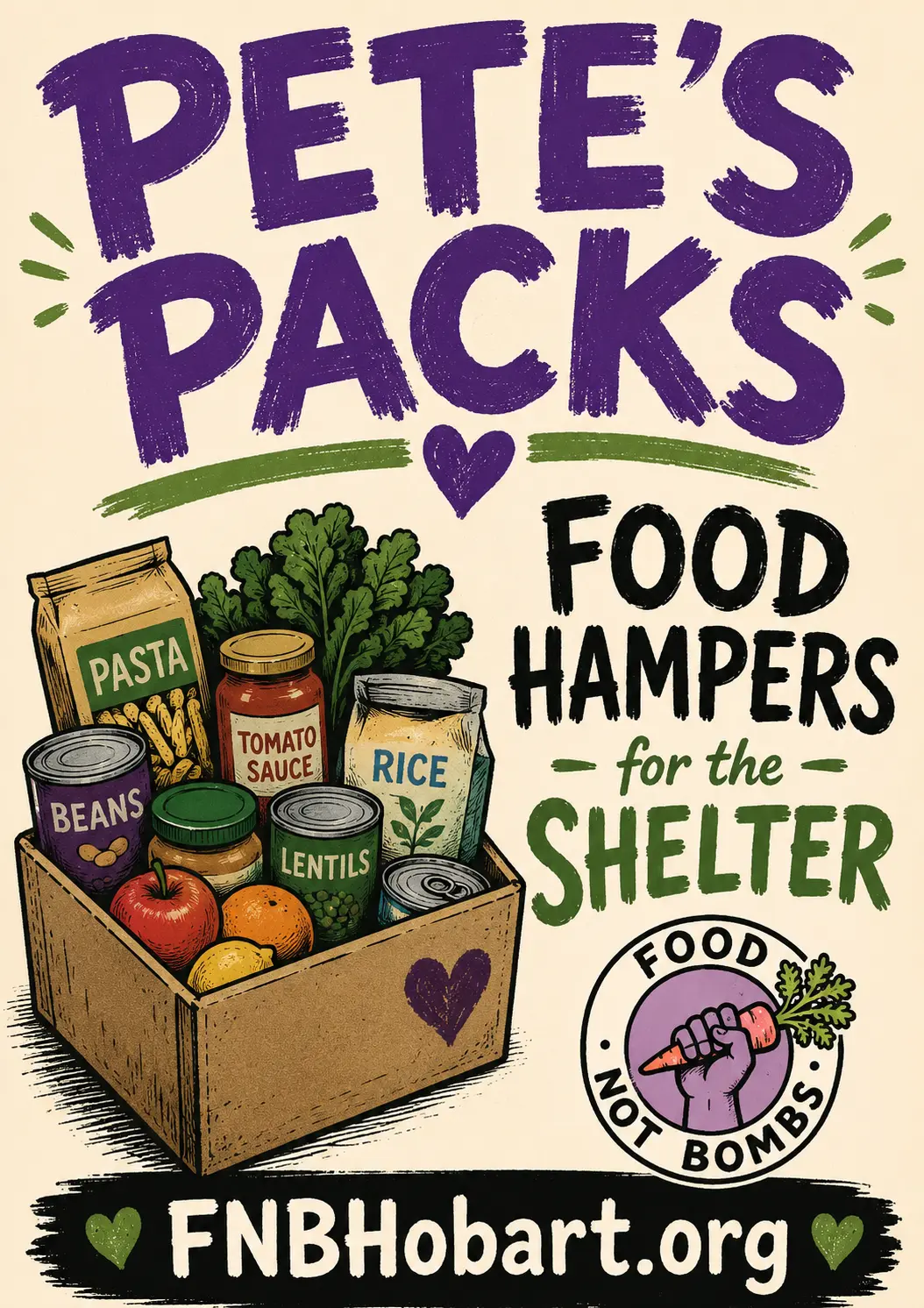
How a Box of Kindness Became a Pathway to Connection
Sometimes the most meaningful community projects begin with something very small.
Pete’s Packs, later affectionately renamed Pete’s Treats, started with a simple idea: a box of treats delivered into the shelter system. Nothing elaborate. Just a practical and thoughtful gesture that might brighten somebody’s day.
Since then, more than 20 boxes have found their way into shelters and community networks around Hobart.
But the story of Pete’s Treats is not really about the boxes.
It is about Pete.
After years of rough sleeping, Pete entered the shelter system himself. Like many people experiencing homelessness, he carried a wealth of experience that most of the community never sees or hears about. Homelessness is often discussed in statistics, policies, funding rounds, and service reports. The personal reality can become hidden behind these larger conversations.
Pete’s Treats helped bring that reality back into view.
Each week, part of Pete’s role was to meet me at the van and collect the box. Before he headed into the shelter, we would stand and chat. Sometimes the conversations were practical. Sometimes they touched on his experiences of homelessness and navigating the shelter system. Not the drama or difficult moments that often capture attention, but the ordinary realities of daily life, relationships, routines, hopes, and challenges.
These conversations mattered.
They reminded me that homelessness is not an abstract social issue. It is deeply personal. It is experienced by individuals with names, histories, skills, humour, strengths, and aspirations.
In a small way, Pete’s Treats helped externalise that reality. The project created a bridge between people who wanted to help and the lived experience of someone who had spent years without stable housing.
The treats themselves became a vehicle for connection.
People who might otherwise feel powerless discovered a practical way to participate. A box of biscuits, snacks, chocolates, or small comforts became more than a donation. It became an act of solidarity. It was a way of saying, “We see you.”
The project also demonstrated something we see repeatedly through Small Projects and Food Not Bombs Hobart: care creates movement.
Many people want to help but do not know how. Their goodwill remains dormant. Their concern remains inert. A simple project can provide a pathway for that concern to become action.
Pete’s Treats mobilised care.
It gave supporters a tangible way to contribute to the wellbeing of people experiencing homelessness. It encouraged conversations about housing and belonging. It reminded us that pathways toward wellbeing and stable housing are often strengthened when people experience dignity, connection, and community alongside practical support.
Importantly, the project supported Pete as well.
Rather than being positioned solely as a recipient of services, Pete became a contributor. He became part of something that benefited others. His involvement helped create purpose, routine, and connection during a significant transition in his own life.
This reflects a belief that sits underneath many of our projects: people are not defined by what they lack. Everyone has something to contribute.
Pete’s Treats may look like a simple box delivered into a shelter.
But beneath that simple act sits a much bigger story about community, participation, dignity, and the possibility that people who have experienced hardship themselves may be among the most powerful people to help others.
Twenty boxes in, that still feels worth celebrating.
- Building Culture, Not Just Meals
 For years in a community kitchen, no one said thank you. It wasn’t rude — it was cultural. Here’s why I kept showing up anyway, and what changed when gratitude quietly entered the room.
 - When someone is in crisis: what helps and what doesn’t
 When someone is in crisis, most people want to help — but good intentions don’t always translate into what actually works. Here’s what helps in the moment (calm presence, practical support, shame-free language), what doesn’t (minimising, fixing, spiritualising), and a few simple scripts you can use when you don’t know what to say.
 - What Mutual Aid Is — and What It Isn’tMutual aid is one of those ideas that sounds simple, until you realise how much it challenges the way we’ve been trained to think. We live in a world where help usually comes with a form attached — an assessment, a referral, a waiting list, a gatekeeper, a set of conditions. Mutual aid doesn’t begin… Read more: What Mutual Aid Is — and What It Isn’t
- Sharing Without Hierarchy
 Power isn’t the problem. It’s what fills the space when connection thins. Support can take many forms. These reflections notice the ways care works best when it is reciprocal, informal, and rooted in relationship.
 - Moving Between Circles
 Mutual aid depends on reciprocity. Care does not. The work is letting people move freely between the two
Leave a Reply